
My Personal Experience with Low Vision Rehabilitation Therapy
I work with Dr. Huggett, and I also have macular degeneration. I went through low vision rehabilitation therapy myself and wanted to share my experience with you.
Request an AppointmentFirst of all, the therapy sessions are in your own home — they come to you, so there’s no need to worry about driving anywhere. The therapy lasts 8 weeks, with 2 sessions a week, and the best part is that Medicare and most insurances will cover the cost.
- They start off by asking you what it is you want to do that your vision loss now prevents you from doing.
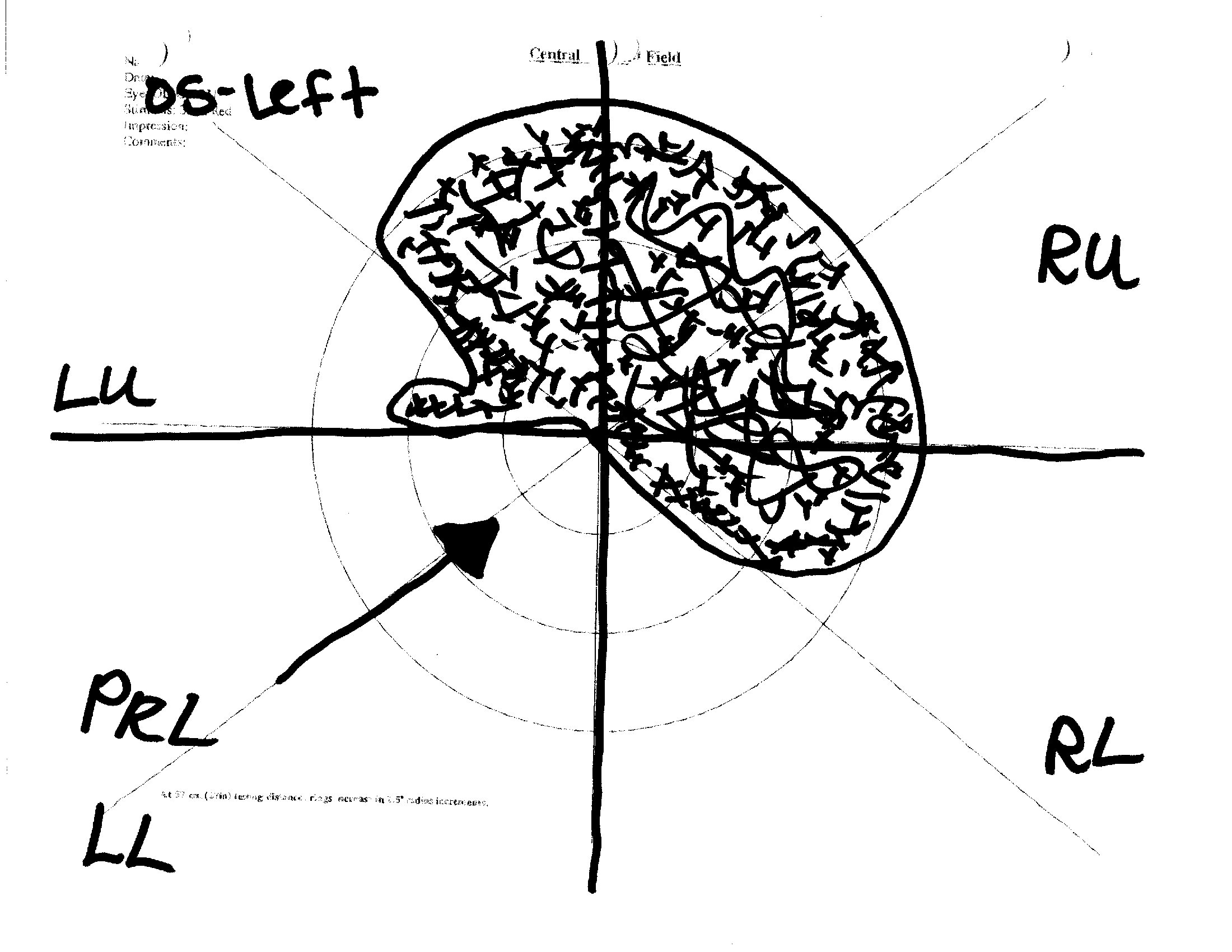
- Then, they assess the amount of your vision loss and map it. By testing you, they can actually draw a map of where your vision loss is located when using your central vision. You can view my vision loss maps for both eyes below to see what they look like.
- Once they know where your vision loss is located, they create a plan of exercises and therapy, similar to eccentric viewing training, to help train your eyes to see around your vision loss. This results in being able to see more of the things you want to see, and do more of the things you want to do.
I’m happy to say that after undergoing the therapy and doing the exercises, I’ve trained myself to automatically see “around” my vision loss, to the point that most of the time I don’t even notice it. And with low vision rehabilitation therapy, this can happen for you too.

Left Eye

Right Eye
Curious What This Could Look Like for You?
Every patient’s vision loss maps differently, which is why every rehabilitation plan starts with a comprehensive low vision evaluation. To learn more about why this kind of ongoing therapy, not just a device, is often considered the right approach, visit our Low Vision Rehab is the Standard of Care page, or read our full Guide to Eccentric Viewing Training. You can also explore our range of low vision glasses and other low vision treatments. Ready to get started? Visit our New Patient Center to see what to expect.
Personal Experience with Low Vision Rehabilitation: Frequently Asked Questions
Where do low vision rehabilitation therapy sessions take place?
Sessions typically take place in your own home, so there’s no need to worry about transportation.
How long does the rehabilitation program last?
The program described here lasted 8 weeks, with 2 sessions per week, though timelines can vary by patient.
Is low vision rehabilitation therapy covered by insurance?
Medicare and most insurance plans typically cover the cost of low vision rehabilitation therapy.
What happens during the first sessions?
Your therapist will ask what your vision loss currently prevents you from doing, then assess and map the exact location of your vision loss in each eye.
What kind of results can I expect?
Many patients train themselves to automatically see “around” their vision loss, reaching a point where it’s barely noticeable during daily activities.
How do I get started with low vision rehabilitation therapy?
The process begins with a comprehensive low vision evaluation, which helps determine whether rehabilitation therapy is the right next step for you.